Why AI-Driven Analysis Redefines SEO Performance

In programmatic SEO, a well-structured template lets you produce lots of landing pages efficiently without building every one from scratch. This design template acts as the structure for all the pages you'll produce utilizing your keyword combinations and data. Let's consider Tripadvisor as an example. They utilize a constant layout to produce individual pages for dining establishments.
They likewise release wider list pages like "Finest restaurants in ((city))", where the city name is a vibrant modifier. These pages assemble relevant restaurants for that place, utilizing the exact same underlying structure with various material based upon the location information. Start by choosing Consider: What the user expects to discover What data you already have What search intent you're targeting For instance, if you're creating location-based service pages, your structure can consist of: Page title (with city or area) Brief description Service offerings Reviews or reviews Contact information A call-to-action (CTA) Each of these elements will end up being in your design template.
The template ought to be: Easy to scan (use headers, bullet points) Mobile-friendly and responsive Fast-loading Clear on CTAs (buttons, links, or types) You can sketch the wireframe or use style tools like before executing it in your website home builder or CMS. Insert vibrant fields where data will be placed. These are generally called tokens or variables depending on your CMS or import tool.
When your template is prepared, you're set to begin creating your programmatic landing pages. As soon as your landing page design template is prepared, you'll require a place to store and handle the information that will occupy each page, such as titles, descriptions, keywords, places, or item details. You can start with something basic, such as an, where each row represents one page and each column holds a various data point (e.g., city name, service, or CTA text).
Advanced Analysis Functions for MarketersThese platforms enable you to arrange information in table format and make it easier to get in touch with automation tools later on while doing so. Pick the tool that finest fits your workflow, but guarantee it's simple to update and structured consistently for smooth combination into your programmatic SEO setup. With your design template and information all set, the final step is to release your content on your site.
Key Software Workflows for Modern Teams
If you're utilizing, tools like enable you to connect your spreadsheet directly to your site. Describe our dedicated tutorial on setting up a WordPress plugin. Once the plugin is triggered, browse to from your WordPress dashboard and merely submit your spreadsheet. Next, inform the plugin what material goes where (e.g., use title in the title, ranking in the paragraph) and the plugin will develop one page per row.
When set up, these tools can instantly create and release a brand-new page every time a brand-new row is included to your data source. This allows the publishing procedure to be faster, more consistent, and scalable, eliminating the need for manual input. Pick the right automation tool based on your CMS, and ensure everything is appropriately mapped before going live.
Normal usage cases include location-based landing pages, item page design templates, event directories, task listings, and catalog structures where each entry follows a comparable format. Programmatic SEO provides a powerful method to scale your material and target a wide variety of search questions with minimal manual effort.
Why Is AI-Driven SEO Necessary in 2026?
For programmatic SEO to work, your pages should deliver real value to users. When done right, programmatic SEO can drive constant organic traffic, enhance search presence, and support long-term development.
If you like this post, let us know by.
Preserving a single website with several pages is tough (but possible), however what about working with hundreds or even thousands of web pages? It might be almost impossible if not for programmatic SEO, a modern option to having SEO-optimized landing pages exactly developed to cater to the user's search intent.
How to Scale Content SEO
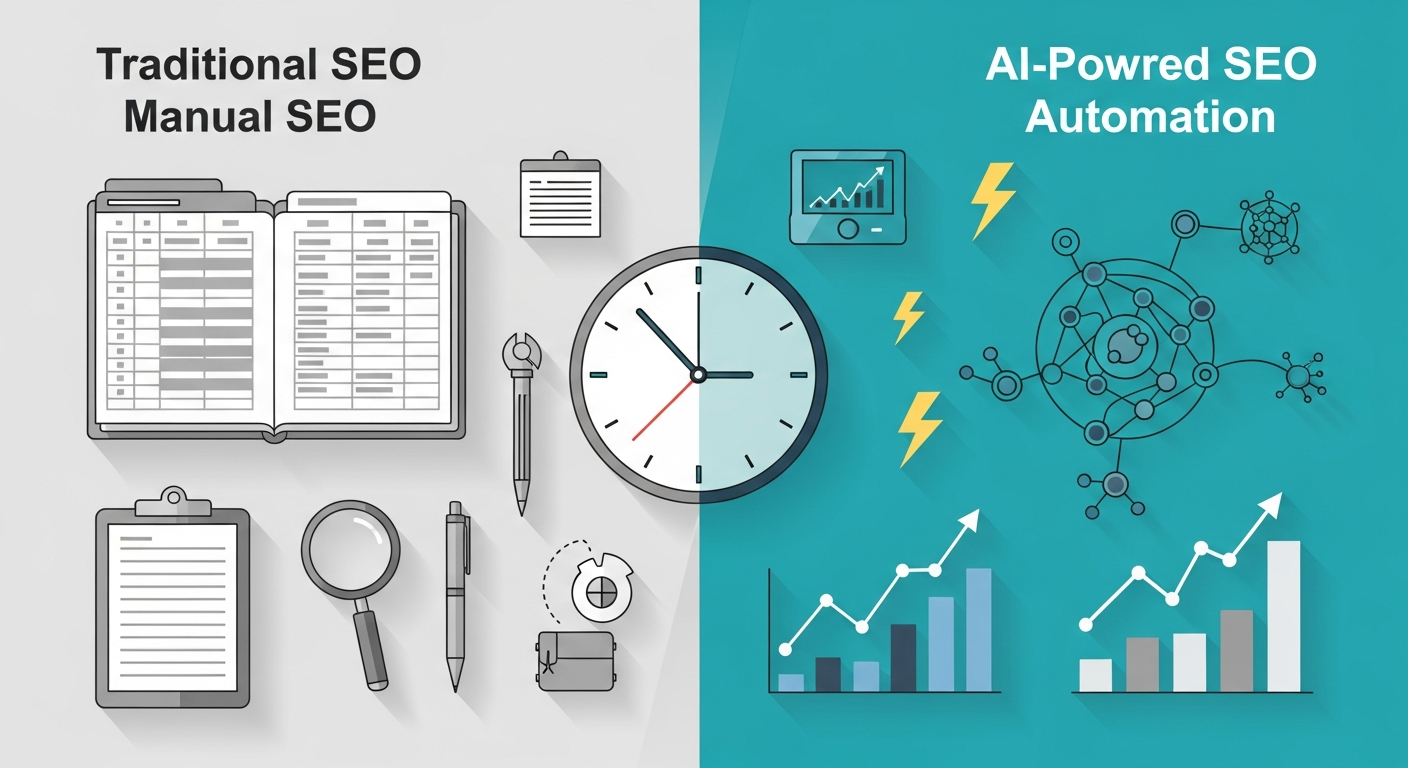
Today, with the AI transformation and automation, programmatic SEO has ended up being a genuine pattern. If you wish to know why it deserves buying programmatic SEO or what programmatic SEO is, keep reading. Promise, it won't be too long. Traditional SEO consists of several processes that improve the exposure and ranking of a website or one websites in online search engine results pages.
For service, it aims to protect high rankings on online search engine. Here comes the very best part: programmatic SEO targets long-tail keywords with lower search volume Greater value rather of going after high-volume competitive keywords. With little to no competition for long-tail keywords, it is more than genuine to protect your location in search results page right from the start.
While programmatic SEO has all the elements of standard SEO, it goes beyond them and is more complex (not in terms of implementation, though). Standard SEO is implemented on one website with numerous pages, whereas programmatic SEO produces several SEO-optimized pages.
Standard SEO is limited in keywords, whereas programmatic SEO is scalable and can have boundless keyword variations. Nevertheless, you can't have a programmatic SEO job without understanding and doing SEO. For an effective programmatic SEO project, you'll want to integrate three key parts: long-tail keywords, pertinent content, and SEO-optimized pages.
Advanced Analysis Functions for MarketersEssential Analysis Functions for Marketers
Long-tail keywords: Those are particular, typically longer phrases that users input into online search engine when they desire their search engine result to be as accurate as possible. When you target long-tail keywords, you're resolving the special requirements of your audience. This implies that competition is typically lower, making it easier to rank well.
Relevant content: To capture the user's attention and offer valuable details, your material should be appropriate and aligned with the user's query. SEO-optimized pages: SEO-optimized pages are the technical backbone of the programmatic SEO project. They consist of the structure, meta tags, headers, and other on-page components that online search engine utilize to examine your material.

Automation tools and software: In programmatic SEO, automation tools simplify numerous SEO tasks, such as keyword research, content optimization, and link structure. Algorithms and data-driven insights: Programmatic SEO uses algorithms and data-driven insights to determine and implement SEO techniques customized to specific service goals and target market. Programmatic SEO is a tactical approach with clear actions and no guesswork.